Every traveler has experienced the frustration of trying to force a zipper closed on an overstuffed suitcase. When preparing for a trip, deciding exactly how to arrange your wardrobe often dictates whether you can travel with a single carry-on or are forced to check a heavy bag. The long-standing debate between rolling and folding clothing is central to this dilemma. Understanding the mechanics behind these two techniques will drastically improve your packing efficiency, save valuable luggage space, and ensure your outfits arrive looking fresh.
The Core Debate: Rolling vs. Folding
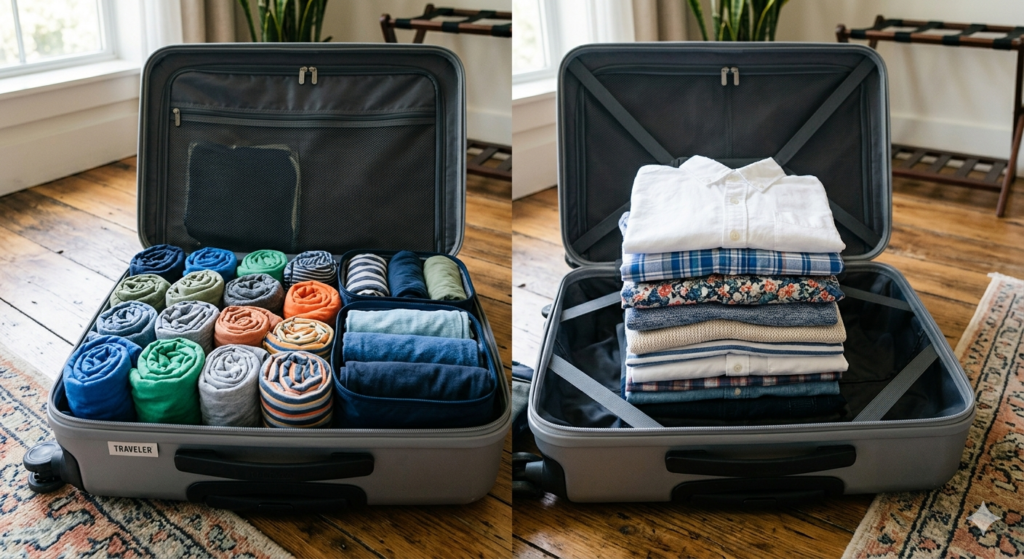
Why roll clothes instead of fold? Rolling clothes compresses fabric into tight cylinders, squeezing out trapped air to maximize luggage space. This method prevents hard creases from forming during transit, making it the superior choice for minimalist packing and keeping your travel wardrobe organized.
Traditional folding creates rectangular stacks that leave awkward gaps of dead space along the curved edges of a backpack or suitcase. Stacking clothes also creates a scenario where you must dig through the entire pile to find a specific shirt, disrupting the organization of your bag. Rolling eliminates this issue by allowing you to view your entire wardrobe at a glance.
Furthermore, rolling provides a modular approach to packing. You can easily categorize these tight cylinders into packing cubes or slot them individually into the small crevices around heavier items, such as toiletry bags or electronics.
How Rolling Maximizes Luggage Space
The primary advantage of the rolling method is pure volume reduction. By tightly winding a garment, you exert consistent pressure that forces air out of the fabric. This is especially effective for lightweight materials like cotton, merino wool, and synthetic athletic wear.
When you pack rolled items, you can utilize the exact geometry of your bag. Small rolled items like socks and underwear can be stuffed inside footwear to maintain the shoe’s shape while reclaiming wasted interior space. This technique is a cornerstone of minimalist packing, where every square inch of luggage capacity is valuable.
If you want to understand how to arrange these compressed rolls perfectly around your heavier gear, our comprehensive guide on How to Pack a Backpack for Travel breaks down the physics of weight distribution step-by-step.
Strategies to Prevent Wrinkles in Transit
A common misconception is that rolling causes clothes to become a wrinkled mess. In reality, traditional folding is the primary culprit behind severe creasing. When you fold a shirt, the physical weight of the items stacked on top presses sharp folds into the fabric, creating permanent creases that are difficult to remove without an iron.
Rolling utilizes smooth tension to prevent wrinkles from forming in the first place. As long as you smooth the garment completely flat on a bed before you begin rolling, the fabric will remain taut and uncreased within its cylindrical shape.
The choice of material also plays a massive role in garment care. Packing a pair of high-quality, wrinkle-resistant travel pants guarantees that you can pull them straight out of a tightly packed bag and wear them immediately to a dinner or business meeting without worry.
When Should You Actually Fold Clothes?
While rolling is universally praised for casual wear, there are specific scenarios where you should fold clothes to save space or protect the garment’s structure. Heavy, rigid items simply do not roll well and will stubbornly uncoil inside your bag, ultimately taking up more room.
You should always utilize the flat-folding method for:
- Bulky winter sweaters and thick fleece jackets.
- Stiff denim jeans.
- Structured blazers, suits, and formal dresses.
- Clothing with delicate embellishments or stiff collars.
For these items, lay them as flat as possible at the very bottom of your suitcase or utilize a specialized garment folder. This hybrid approach—rolling your soft basics and flat-folding your structured outer layers—yields the absolute best results for any trip.
Conclusion
Deciding why roll clothes instead of fold ultimately comes down to efficiency and fabric care. Rolling is the undisputed champion for maximizing space, preventing hard creases, and organizing a minimalist travel bag. However, knowing when to deploy traditional folding for heavier, structured garments ensures your wardrobe remains protected. By combining these two strategies, you can pack lighter, travel smarter, and arrive at your destination with clothes ready to wear.
Frequently Asked Questions (FAQ)
Does rolling clothes stretch out the fabric?
No, standard rolling will not stretch or damage most fabrics. Avoid pulling aggressively on the collars or hems of delicate items, but the gentle tension required to roll a t-shirt or pair of pants is perfectly safe for standard travel wear.
Can I roll clothes in a hard-shell suitcase, or is it only for backpacks?
Rolling works exceptionally well in both backpacks and hard-shell suitcases. In a suitcase, packing rolled clothes vertically inside a packing cube allows you to see every item at once, functioning much like a portable dresser drawer.
What is the best way to roll a button-up dress shirt?
To roll a button-up shirt without crushing the collar, button the shirt completely, lay it face down, and fold the arms straight across the back. Fold the shirt in half vertically, and then roll gently from the bottom hem upwards toward the collar, stopping just below the collar to avoid crushing its shape.