Staring at a pile of clothes and an empty bag can quickly become overwhelming before a trip. Cramming items inside without a thoughtful plan usually results in a lopsided, bulging load that strains your shoulders and ruins your posture. To truly master how to pack a backpack for travel, you need a strategic approach based on physics and organization. This masterclass will teach you the exact steps to maximize internal capacity, distribute weight perfectly, and keep your essentials accessible.
The Core Principles of Packing a Backpack
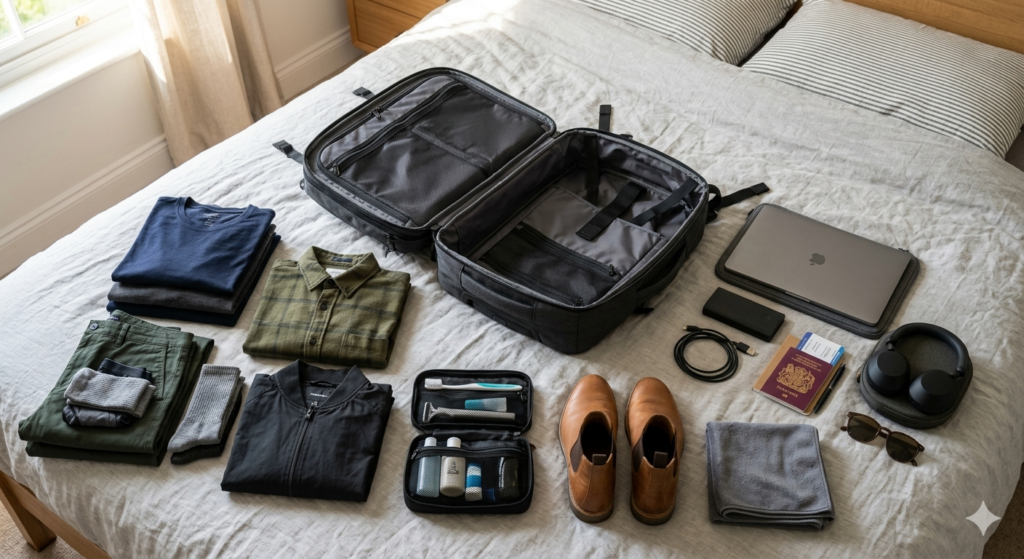
Learning how to pack a backpack for travel involves strategically organizing your belongings to maximize space and distribute weight evenly. The process prioritizes placing heavy items close to your center of gravity, utilizing compression techniques for clothing, and keeping essential transit items easily accessible.
Experienced travelers often rely on the “ABC” method of packing: Accessibility, Balance, and Compression. Balance is arguably the most critical factor for your physical comfort. If the weight inside your bag is positioned too high, it will pull you backward; if it sits too far away from your body, it will strain your lower back.
Applying compression ensures that soft items do not occupy unnecessary volume. Accessibility guarantees that you will not have to empty your entire bag onto an airport floor just to find your passport or a liquid toiletry bag.
Step 1: Building the Base Layer
The bottom section of your backpack should be reserved for items you will not need until you reach your accommodation. This is the ideal zone for soft, bulky items that can act as a shock absorber when you set the bag down on the ground. Think of this area as the foundation of your pack.
Common items for the base layer include:
- Extra shoes or sandals (placed inside a protective bag).
- Thick trousers or denim jeans.
- A rolled-up light jacket or sweater.
- A travel towel or sleeping garments.
Always stuff your extra shoes with smaller items like rolled socks, underwear, or charging cables. This simple trick reclaims dead space inside the footwear and helps the shoes maintain their shape during transit.
Step 2: Weight Distribution in the Core
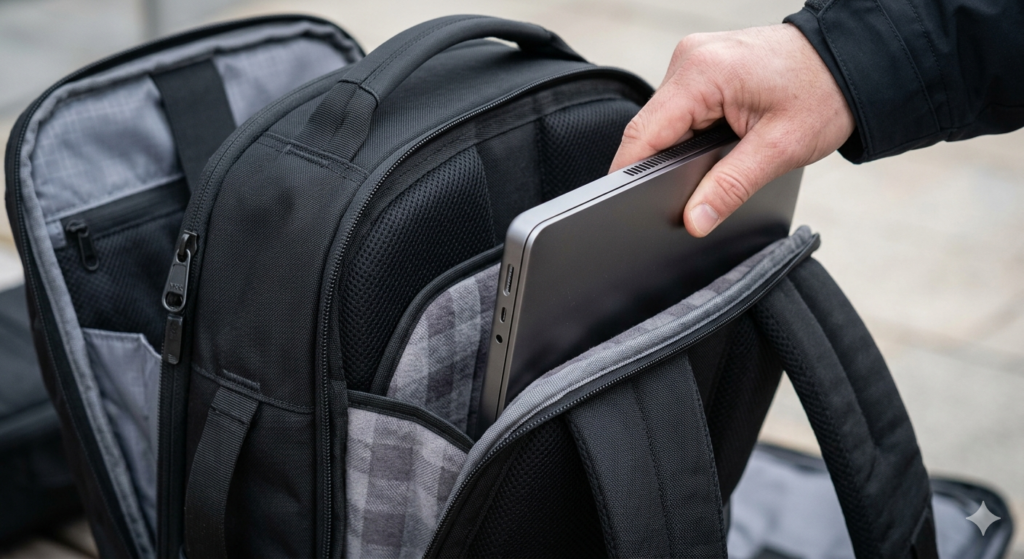
The middle section of your backpack is the most critical area for proper ergonomics. The heaviest items in your inventory must sit in the center of the bag, resting directly against the panel that touches your back. Keeping the center of gravity close to your spine prevents the bag from swinging or pulling you off balance.
Your laptop, heavy electronics organizers, books, and dense toiletry bags belong in this zone. Many modern travel bags feature a dedicated laptop sleeve positioned directly against the back panel for this exact reason.
If your bag does not have a dedicated sleeve, sandwich your electronics between layers of clothing to protect them from impact. Ensure that the left and right sides of this core section are balanced so the bag does not lean heavily to one side.
Step 3: Maximizing Space with Clothing
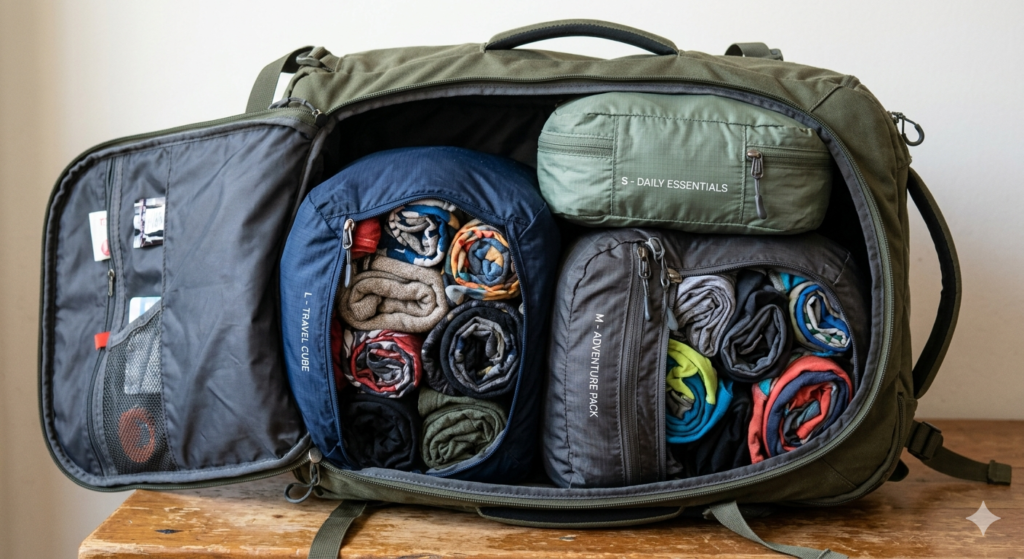
The upper-middle section of your bag is reserved for the bulk of your wardrobe. This is where a solid minimalist packing guide becomes invaluable. Instead of folding your shirts and pants traditionally, roll them tightly into cylinders to eliminate dead space and reduce fabric creasing.
Organizing these rolled clothes into a set of compression packing cubes allows you to squeeze excess air out of your garments. This specific space saving method condenses your wardrobe into manageable building blocks that stack neatly inside the main compartment.
Group your clothing logically within these cubes. Dedicate one cube to shirts, another to pants, and a smaller one to undergarments. This modular approach makes it incredibly easy to unpack at your hotel without destroying the organization of your entire bag.
Step 4: Accessibility for Security and Transit
The top portion and external pockets of your bag are reserved for items you need frequently or urgently. Figuring out how to travel with one bag efficiently means preparing for airport security checkpoints before you even leave the house. You should never have to dig through your base layer to find an essential item.
The very top of the main compartment should house your 3-1-1 liquids bag. Since you must remove this at the TSA security scanner, placing it at the zipper line saves valuable time.
Use external quick-access pockets for items like your passport, boarding passes, sunglasses, a power bank, and a water bottle. By keeping transit essentials in dedicated outer compartments, you ensure a frictionless journey through the airport and on the plane.
Conclusion
Understanding how to pack a backpack for travel completely changes the way you navigate the world. By implementing strict weight distribution rules, you protect your back from unnecessary fatigue. Furthermore, utilizing space saving strategies like compression cubes ensures you can bring everything you need without upsizing your luggage. Master these core principles, and you will transform a chaotic packing process into a streamlined, highly efficient system.
Frequently Asked Questions (FAQ)
Where should the heaviest items go in a travel backpack?
The heaviest items, such as laptops, cameras, or dense toiletry bags, should always be packed in the middle of the bag, as close to your back (the harness system) as possible. This aligns the bag’s center of gravity with your own, preventing the load from pulling you backward.
Does rolling clothes actually save space compared to folding?
Yes, tightly rolling clothes forces trapped air out of the fabric and creates uniform cylindrical shapes that can be packed tightly together. This method eliminates the awkward gaps and dead space created by traditional square folding.
How do I pack dirty clothes during a long trip?
Always pack a lightweight, dedicated dry bag or a reusable fabric laundry bag. Keep your dirty clothes separated from your clean garments, and use compression to squeeze the air out of the laundry bag before placing it back into your main backpack.