Many travelers eventually realize that shedding physical baggage makes exploring the world infinitely more enjoyable. However, once you commit to ditching the heavy checked suitcase, a new debate emerges: how light is light enough? The comparison of ultralight vs lightweight travel highlights two distinct philosophies within the minimalist travel community. Understanding the nuances between these weight classes will help you choose the right gear and mindset for your next adventure.
Defining the Weight Classes
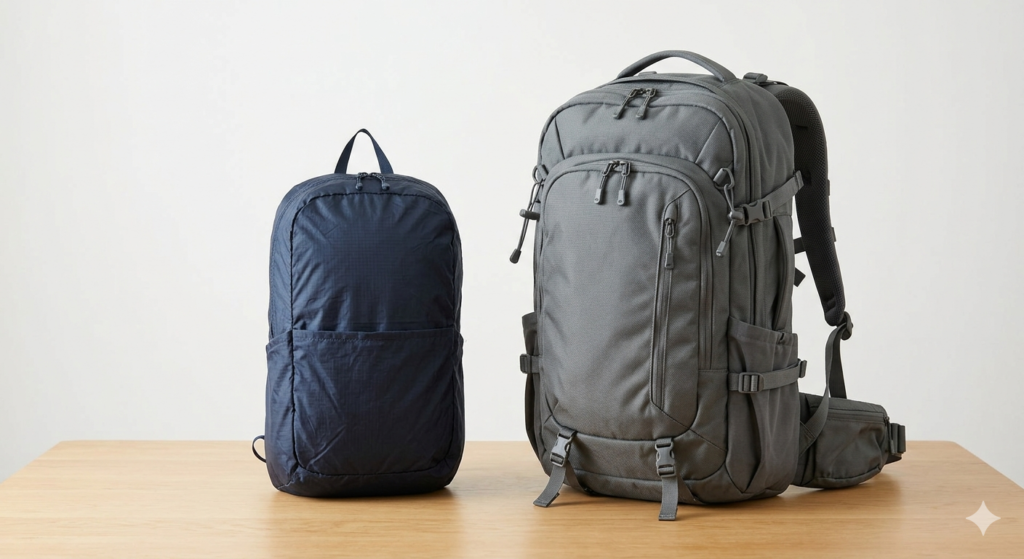
In the debate of ultralight vs lightweight travel, lightweight travel typically involves packing a carry-on bag weighing between 15 and 20 pounds (7-9 kg). Ultralight travel is an extreme minimalist approach, restricting the total bag weight to under 10 pounds (4.5 kg) by scrutinizing every single ounce.
While both methods prioritize mobility and avoiding checked bag fees, the transition from lightweight to ultralight requires significant sacrifices. Lightweight travelers aim for a balance of comfort and convenience within airline limits. In contrast, ultralight enthusiasts prioritize absolute freedom of movement above all else.
An ultralight packer will often wash clothes daily to carry fewer garments and cut items in half to save microscopic amounts of weight. A lightweight packer simply packs smartly to avoid dragging a rolling suitcase.
The Principles of Lightweight Travel
For most people, backpacking light within the lightweight category is the perfect sweet spot. This approach allows you to pack a 30L to 40L bag with enough clothing to last a week without doing laundry. You can still comfortably bring a dedicated laptop, an extra pair of shoes, and standard travel toiletries.
The primary goal here is simply to meet standard airline carry-on weight restrictions. These limits generally hover around 7kg to 10kg depending on the specific carrier. You are optimizing for ease of transit through the airport without completely abandoning your everyday comforts.
Minimalist packing at this level involves making highly efficient choices. You might swap heavy denim jeans for lighter synthetic fabrics or choose a versatile jacket. However, you do not need to obsess over the weight of your charging cables to achieve a successful lightweight pack.
The Extremes of Ultralight Travel
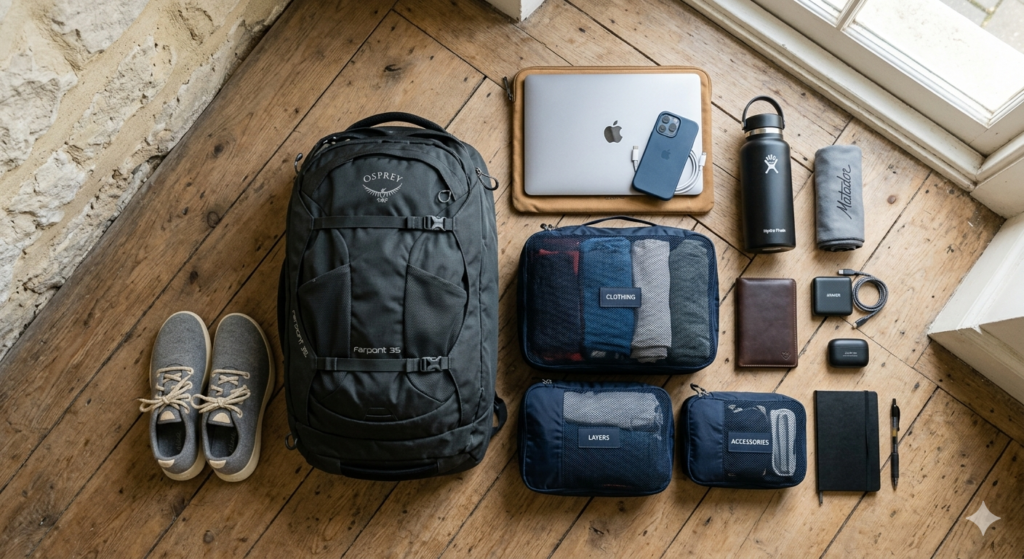
Stepping into the ultralight category requires a strict, almost scientific approach to gear selection. Practitioners of this style rely heavily on specialized ultralight travel gear, utilizing high-tech materials like Dyneema, titanium, or ultra-thin merino wool. A typical ultralight bag sits around 15L to 20L in total volume.
At this extreme stage, every single item must serve multiple purposes. A common strategy involves carrying only two outfits: one to wear and one to wash. Using a compact ultralight dry bag as a portable washing machine is a popular technique to keep clothes clean in hotel sinks without adding measurable weight to your pack.
Electronics are also heavily minimized in an ultralight setup. An ultralight traveler might replace a heavy laptop with a smartphone and a foldable Bluetooth keyboard. Comfort is found in the physical relief of carrying almost nothing, rather than having a wide variety of items at your disposal.
Which Style is Right for You?
Deciding between these two styles depends entirely on your travel goals, physical capabilities, and personal comfort threshold. If you are a digital nomad who requires a heavy laptop and camera gear, lightweight travel is the most practical choice. It offers the benefits of a single bag without compromising your ability to work.
Conversely, if you are moving rapidly between different cities, hiking frequently, or flying exclusively on strict budget airlines, pushing toward the ultralight end of the spectrum is highly beneficial. It completely eliminates the physical strain of transit and ensures your bag fits beneath any airplane seat.
If you are new to the concept of downsizing your luggage, jumping straight into extreme minimalism can be jarring. Our Ultimate Guide to One Bag Travel provides an excellent starting point for those looking to master the lightweight basics before attempting an ultralight setup.
Conclusion
Understanding the difference between ultralight vs lightweight travel empowers you to pack more intentionally for your specific needs. Whether you choose the balanced comfort of a lightweight setup or the extreme, fast-paced mobility of an ultralight kit, adopting minimalist packing principles will revolutionize your journeys. By prioritizing versatile gear and shedding unnecessary weight, you create more physical and mental space to enjoy the actual experience of traveling.
Frequently Asked Questions (FAQ)
Is ultralight travel gear more expensive?
Yes, generally speaking. Because ultralight gear relies on advanced, space-age materials (like Dyneema fabrics, titanium hardware, and high-quality down insulation) to shave off ounces, these items often come with a premium price tag compared to standard lightweight travel gear.
Can I travel ultralight in cold winter climates?
Yes, but it requires highly strategic layering. Instead of packing thick, heavy winter coats, ultralight travelers rely on a thin thermal base layer, a highly compressible down mid-layer, and a paper-thin waterproof outer shell to trap heat without adding bulk.
How do ultralight travelers handle liquids and toiletries?
To save weight, ultralight travelers frequently abandon liquid toiletries altogether. They swap heavy bottles of shampoo, body wash, and toothpaste for solid shampoo bars, solid deodorant, and dehydrated toothpaste tablets, which weigh a fraction of their liquid counterparts.