Airline terminology can be incredibly confusing for beginners, especially when trying to decipher the fine print on a basic economy ticket. You might assume your trusted backpack is perfectly fine, only to get hit with a hefty fee at the boarding gate because it does not comply with the carrier’s definition. This guide demystifies budget airline rules by explaining exactly what qualifies as an under seat bag. By understanding these parameters, you can master personal item travel without the stress of unexpected baggage charges.
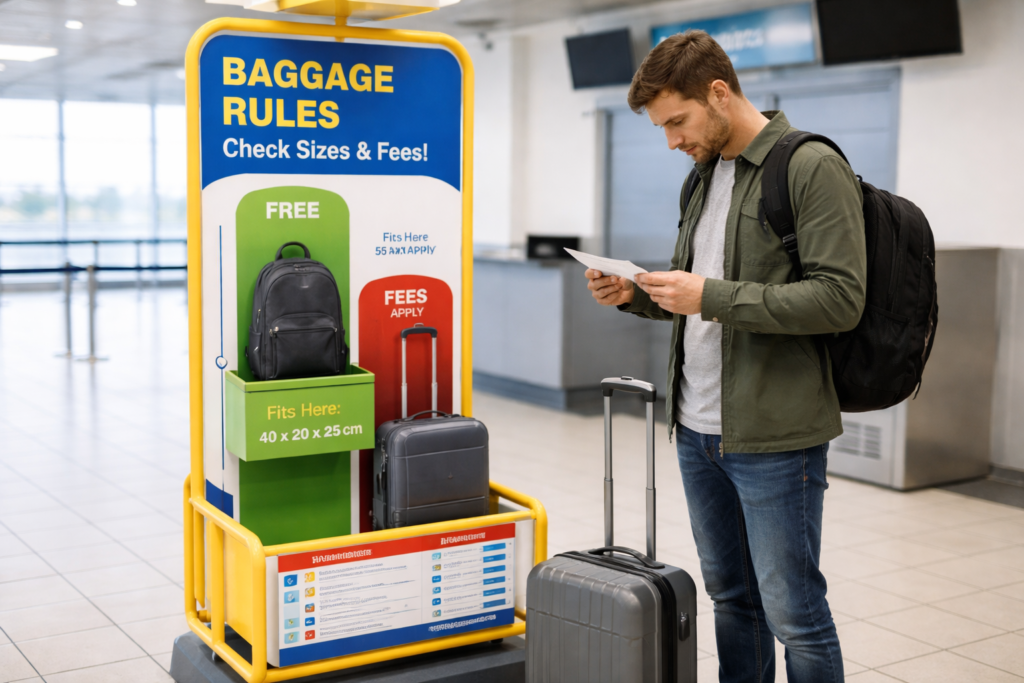
Defining the Personal Item
What counts as a personal item? A personal item is a small piece of luggage, such as a purse, laptop bag, or small backpack, that must fit completely in the space underneath the seat in front of you during a flight.
Unlike a standard carry-on designed for the overhead bin, this bag is meant to stay with you at your seat. Airlines enforce this rule strictly for safety reasons. It ensures that the aisles and your immediate foot space remain clear during an emergency evacuation.
Because it stays at your feet, this bag provides easy access to in-flight essentials. Passengers typically use it to store electronics, medication, travel documents, and a small amount of clothing.
Common Types of Qualifying Bags
When navigating personal item travel, it helps to know which specific types of bags airlines generally accept. The most common examples include briefcases, medium-sized purses, laptop sleeves, and dedicated camera bags. Diaper bags also frequently qualify, though some airlines allow them as an extra free item.
A well-designed small daypack or sling bag is often the most practical choice for efficient travelers. These styles keep your hands free while navigating the terminal and slide effortlessly beneath the seat.
Small duffel bags and tote bags can also work, provided they do not exceed the airline’s maximum dimensions. Always ensure the bag is soft-sided so it can be slightly compressed if you are required to place it into the metal sizing bin at the boarding gate.
Navigating Budget Airline Rules
Budget airline rules are notoriously strict regarding luggage sizes. Carriers like Spirit, Frontier, and Ryanair use the personal item allowance as their baseline fare, meaning they will charge a premium for anything larger. For these airlines, your small under seat bag is your only free piece of luggage.
Typically, the maximum dimensions for an under seat bag hover around 18 x 14 x 8 inches (45 x 35 x 20 cm). However, these measurements fluctuate by a few inches depending on the specific airline and the aircraft they operate.
To avoid gate fees, it is absolutely essential to measure your fully packed bag at home. Include all external pockets, extended handles, and shoulder straps in your measurements to ensure full compliance with the airline’s policy.
Maximizing Your Under Seat Bag
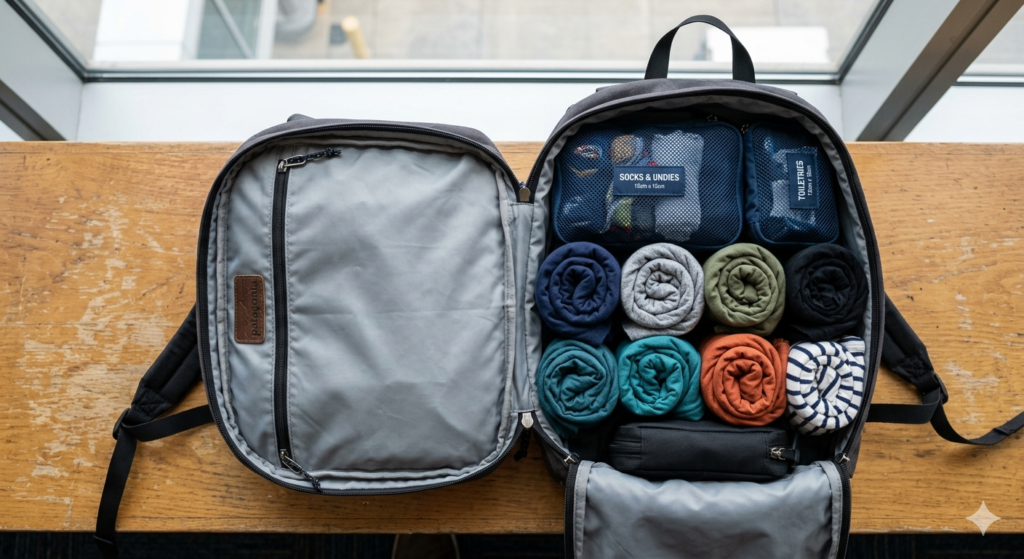
Packing effectively for a trip using only a small bag requires strategic planning and discipline. Prioritize multi-purpose clothing and limit bulky items like heavy shoes or thick jackets. Wearing your heaviest clothing on the plane is a simple trick to free up valuable interior space.
Rolling your clothes instead of folding them is a proven technique to maximize the limited space inside an under seat bag. Additionally, packing heavy or dense items at the bottom of the bag helps distribute the weight, making it more comfortable to carry through the airport.
If you are ready to transition to this highly mobile style of travel, our Ultimate Guide to One Bag Travel provides a comprehensive blueprint. Mastering these foundational techniques will completely transform how you approach packing for future flights.
Conclusion
Navigating airport terminology does not have to be a stressful experience once you understand the basic definitions. By knowing exactly what counts as a personal item, you can confidently pack an under seat bag that meets all budget airline rules. Embracing personal item travel not only saves you significant money on baggage fees but also streamlines your entire airport experience from check-in to arrival.
Frequently Asked Questions (FAQ)
Can I bring a pillow or blanket as a personal item?
Most major airlines allow you to bring a neck pillow, a small blanket, or a coat in addition to your personal item. However, it is always best to check the specific carrier’s policy, as ultra-low-cost airlines may count these items against your strict allowance if they do not fit inside your bag.
Does a shopping bag count as my personal item?
Items purchased at duty-free or airport shops after you have passed through security are generally allowed on board alongside your personal item. Standard shopping bags or plastic bags brought from home, however, will usually be counted as your primary personal item by gate agents.
Is a standard school backpack considered a personal item?
Yes, a standard school or laptop backpack typically fits the dimensions required for under-seat storage perfectly. You must ensure it is not overstuffed, as it still needs to slide completely under the seat in front of you without protruding into the aisle or your legroom.