Arriving at the boarding gate only to be told your bag is too big is a traveler’s worst nightmare. Budget airlines are notorious for strictly enforcing bag limits and handing out hefty last-minute fees to unsuspecting passengers. Understanding the exact difference between a carry-on vs personal item size is critical to avoid these costly surprises. This factual breakdown will clarify confusing airline baggage limits so you can pack confidently for your next flight.
The Key Differences Explained
When comparing carry-on vs personal item size, a carry-on is a larger bag designed to fit in the overhead bin, typically measuring 22 x 14 x 9 inches. A personal item is smaller, usually around 18 x 14 x 8 inches, and must fit completely under the seat in front of you.
While standard carry on dimensions are fairly consistent across major carriers, personal item allowances can vary wildly. This discrepancy causes massive confusion for passengers flying basic economy or utilizing budget airlines. Knowing exactly which ticket type you purchased dictates which bag you are legally allowed to bring on board.
Always double-check your boarding pass before packing. Many airlines now offer “basic economy” fares that strip away your right to an overhead bin bag, leaving you with only the underseat allowance.
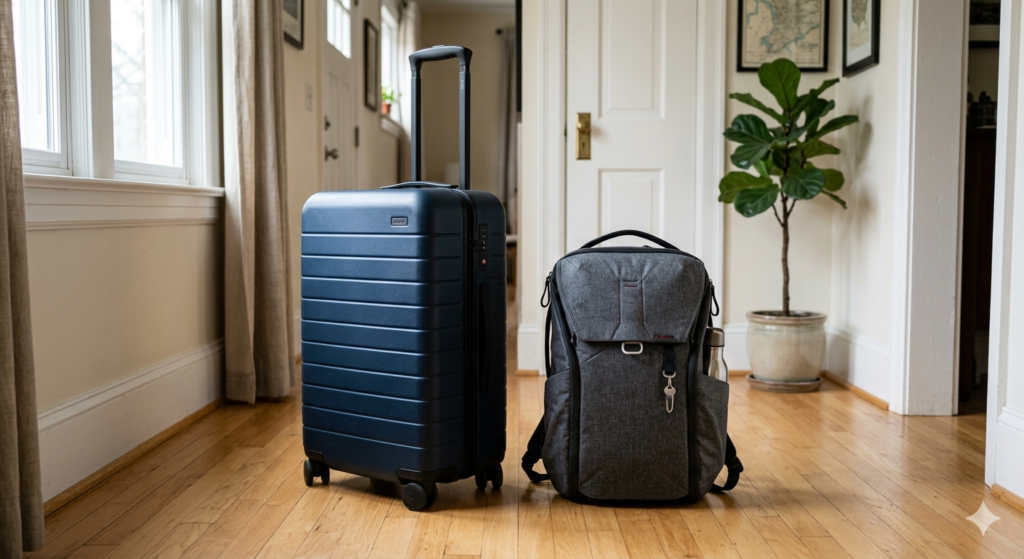
Understanding Standard Carry On Dimensions
The industry standard for domestic US flights generally caps overhead baggage at 22 x 14 x 9 inches (56 x 36 x 23 cm). It is crucial to note that these dimensions include the wheels and handles of a rolling suitcase. International flights, particularly in Europe, often have slightly stricter limits, closer to 21.5 x 15.5 x 9 inches (55 x 40 x 23 cm).
Beyond physical size, many international carriers impose strict weight limits on overhead bags. It is incredibly common to see airline baggage limits capped at 7kg to 10kg (15 to 22 lbs) for the cabin. Always check the specific weight restrictions of your carrier, as gate agents frequently use portable scales to weigh bags before boarding.
Navigating Underseat Luggage Rules
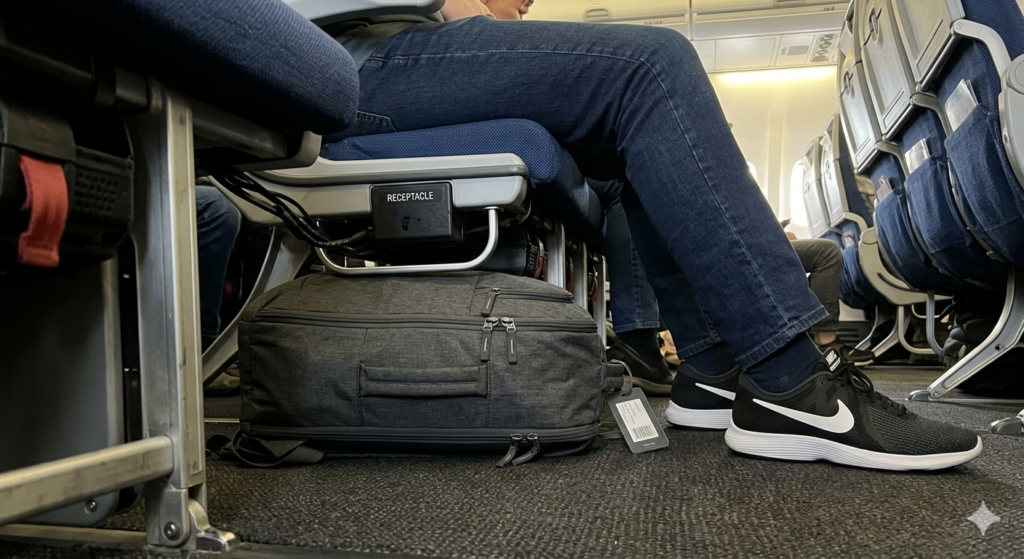
A personal item is traditionally defined as a purse, small daypack, laptop bag, or briefcase. Safety regulations require that this underseat luggage must fit entirely in the space beneath the seat ahead of you so it does not block evacuation routes.
Budget airlines use the personal item allowance as their baseline, meaning you must pay extra for anything larger. Typical dimensions for this category max out around 18 x 14 x 8 inches (45 x 35 x 20 cm). Investing in a specifically designed underseat travel backpack ensures you maximize every inch of this restricted space. These bags are engineered to hold a surprising amount of gear while remaining fully compliant with the strictest airline sizers.
How to Avoid Sizer Fees at the Gate
The best strategy for avoiding gate fees is to never guess your bag’s size. Measure your fully packed luggage at home, taking care to include any bulging front pockets or extended handles. Soft-sided backpacks often fit better in metal sizers because they can be slightly squished, whereas hard-shell suitcases cannot.
If you are ready to downsize your luggage and master the art of packing light, our Ultimate Guide to One Bag Travel provides a complete blueprint for traveling efficiently. Adhering to these principles guarantees a smoother boarding process and eliminates baggage anxiety.
Conclusion
The battle of carry-on vs personal item size ultimately comes down to knowing your airline’s specific rules. By understanding standard carry on dimensions and strict underseat luggage restrictions, you can navigate airline baggage limits like a pro. Pack smart, measure your bags carefully before leaving home, and enjoy a stress-free boarding experience on your next adventure.
Frequently Asked Questions (FAQ)
Can a regular backpack be considered a personal item?
Yes, as long as it fits the airline’s specific dimensional limits and can slide completely under the seat in front of you. Most standard school-sized or laptop backpacks easily qualify as personal items.
Do airlines really check carry-on sizes at the gate?
Yes, especially budget and low-cost airlines. Gate agents frequently ask passengers to place their bags into metal sizers before boarding, and any bag that does not fit easily will incur a hefty gate-check fee.
Are wheels and handles included in carry-on dimensions?
Absolutely. The length, width, and height limits dictated by airlines apply to the entire exterior of the bag. If your suitcase body fits but the wheels stick out, it may be rejected at the gate.