Traveling to a cold destination often induces packing anxiety. Sweaters, coats, and boots take up massive amounts of space, making it seem impossible to avoid checking a giant suitcase. However, learning how to pack winter clothes in a carry-on is entirely achievable with the right strategy. By shifting your focus from thick individual garments to smart material choices and efficient packing techniques, you can comfortably explore freezing climates out of a single piece of luggage.
The Core Strategy for Cold Climates
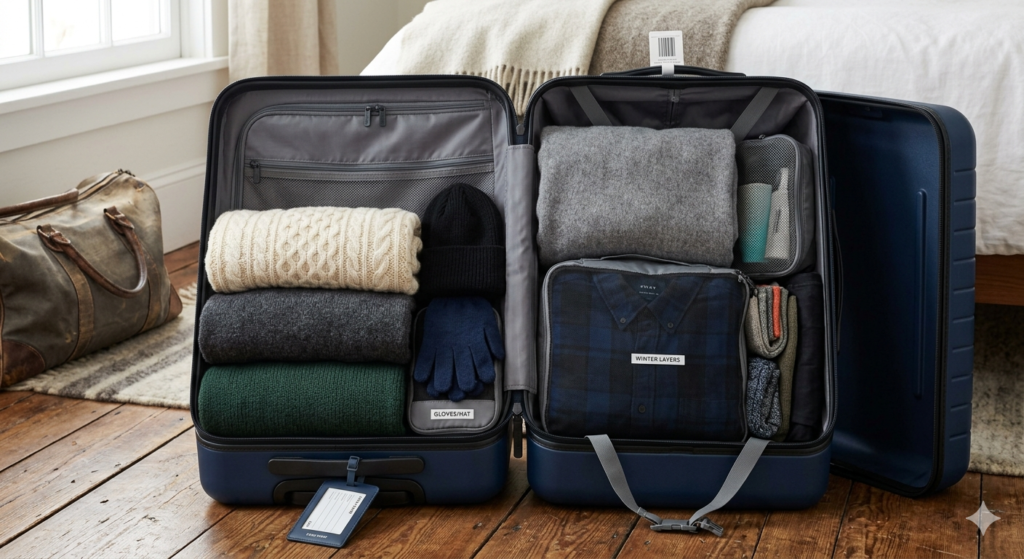
To successfully pack winter clothes in a carry-on, you must abandon thick, heavy garments in favor of a strategic layering system. This involves packing thin thermal base layers, insulating mid-layers, and a thin, weather-resistant outer shell to trap body heat effectively without consuming luggage space.
Cold weather minimalist travel relies entirely on physics and trapped air. Air trapped between multiple thin layers insulates your body much better than one giant, chunky sweater. This modular approach provides warmth while drastically reducing the physical footprint of your wardrobe.
Furthermore, layering gives you the flexibility to adjust your temperature dynamically. As you move from freezing outdoor streets to highly heated indoor museums or transit stations, you can easily add or remove thin layers to stay comfortable.
Choosing the Right Fabrics
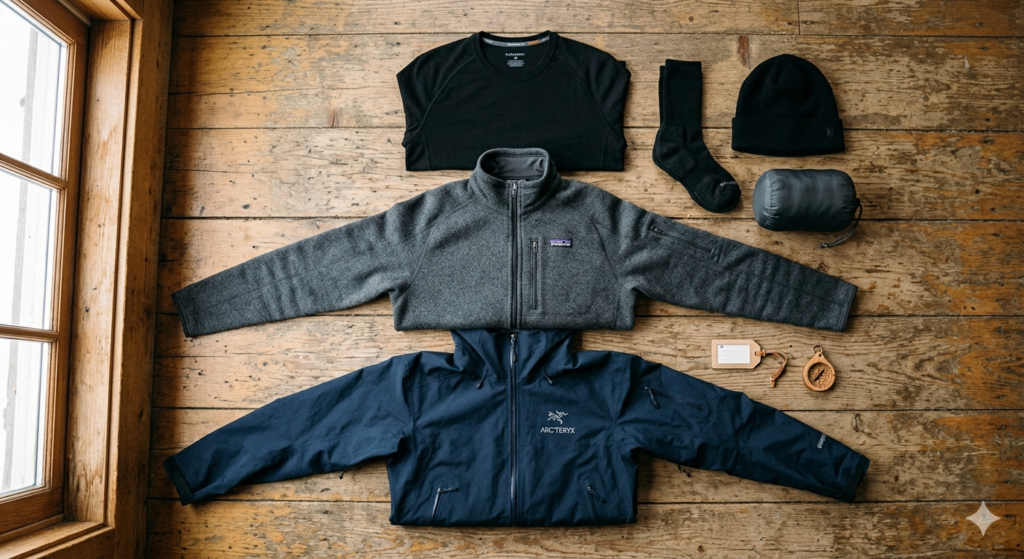
Fabric selection dictates exactly how much volume your clothing will occupy. Avoid heavy cotton, as it retains moisture, takes days to dry, and provides almost zero insulation when damp. Instead, prioritize high-quality merino wool or synthetic thermal blends for your base layers, as they are paper-thin but incredibly warm.
For your primary insulation, utilizing a packable down jacket or travel vacuum bags setup offers incredible space-saving advantages. High-quality down jackets compress into a fraction of their original size, allowing you to stuff a severe-weather coat into a tiny corner of your bag. If you absolutely must pack thicker fleece or knit items, compression bags will physically squeeze the air out of the fabric, instantly doubling your available space.
Techniques for Bulky Clothes Packing
Bulky clothes packing requires aggressive compression and smart spatial awareness. Standard folding techniques will leave you with a full bag after packing just two sweaters. To counter this, utilize the rolling method for your base layers, t-shirts, and thinner mid-layers to squeeze out excess air and fill the gaps around larger items.
For heavier items that simply cannot be rolled, strategic placement inside your luggage is critical. If you are unsure how to arrange these dense garments without throwing off your bag’s center of gravity, reviewing our guide on How to Pack a Backpack for Travel provides a step-by-step masterclass on optimal weight distribution. Always pack your heaviest, densest items close to the back panel or at the base of the bag to maintain balance.
What to Wear on the Plane
The most effective space-saving rule for winter travel is to wear your bulkiest items in transit. Never pack your heavy winter boots, your thickest sweater, or your primary winter coat inside your carry-on luggage. Wearing them through the airport instantly frees up massive amounts of internal bag capacity.
Airplanes are notoriously chilly, so wearing your heaviest layers usually keeps you quite comfortable during the flight. Once you board the aircraft, you can easily stow your large coat in the overhead bin or use it as a makeshift blanket. This simple habit is the absolute cornerstone of traveling light in the winter.
Conclusion
Mastering how to pack winter clothes in a carry-on entirely eliminates the need for heavy, cumbersome suitcases during cold weather trips. By prioritizing a strategic layering system over single bulky items, wearing your heaviest gear on the plane, and utilizing smart compression techniques, you can travel to any freezing climate with just one bag. Embrace these minimalist principles to stay warm, agile, and highly organized on your next winter adventure.
Frequently Asked Questions (FAQ)
Are travel vacuum bags safe for packing down jackets?
While vacuum bags are excellent for saving space, storing a down jacket fully compressed for long periods can damage the delicate feathers and reduce its insulating loft. It is best to compress down jackets only for the duration of your flight and unpack them as soon as you arrive.
How many base layers do I need for a week in the snow?
If you choose high-quality merino wool, you only need two or three base layers for a week-long trip. Merino wool is naturally odor-resistant and breathable, allowing you to wear the same layer multiple times before it requires washing.
Can I bring my heavy winter coat as my personal item?
A winter coat worn on your body or carried over your arm does not count toward your airline luggage allowance. You can carry your coat onto the plane in addition to your standard carry-on and personal item without incurring any extra fees.