Merino wool is universally praised by minimalist travelers for its ability to resist odors and regulate body temperature. However, a major barrier prevents many people from investing in this incredible fabric: the lingering fear of an unbearable itch. Most travelers associate wool with the thick, scratchy winter sweaters of their childhood. The good news is that modern travel garments behave entirely differently. This guide explains the science behind why certain wools irritate the skin, how to choose the right garments, and simple fixes to ensure your travel wardrobe remains incredibly soft.

The Science: Why Does Wool Itch?
Why is merino wool itchy? Merino wool can sometimes feel itchy due to a high fiber diameter. When coarse, thick wool fibers press against the skin, they do not bend easily, causing microscopic pokes that trigger a mechanical, prickly sensation on sensitive nerve endings.
It is crucial to understand that the “itch” associated with wool is almost never an allergic reaction. Instead, it is a purely mechanical issue based on the stiffness of the individual fibers. If a fiber is thick and rigid, it will poke straight into your skin rather than flexing away from it.
Traditional “ragg” wool, commonly used in heavy blankets and vintage sweaters, utilizes these thick, coarse fibers. Because these fibers are robust, they trap heat well but feel terribly abrasive against bare skin.
Understanding Micron Count Clothing
The secret to avoiding the itch lies in measuring the thickness of the wool fiber, which is calculated in microns. For context, a standard human hair measures roughly between 50 and 100 microns in diameter. When shopping for travel gear, you must pay attention to the specific numbers used in micron count clothing.
Any wool fiber with a diameter thicker than 25 microns will generally cause an itching sensation for most people. Standard merino wool naturally falls below this threshold, typically ranging from 20 to 24 microns, making it much more comfortable than traditional wool.
However, the best travel brands utilize “fine” or “superfine” merino wool. These premium garments utilize fibers measuring between 15 and 19 microns. At this microscopic diameter, the fibers are so incredibly thin and flexible that they cannot poke the skin, resulting in a fabric that feels as soft as premium cotton.
How to Soften Wool Traveling
Even with a low micron count, some merino garments can feel slightly stiff straight out of the package or after being washed in hard water. If you find yourself dealing with minor prickliness on the road, learning how to soften wool traveling can save your wardrobe.
Because wool is naturally composed of keratin—the exact same protein as human hair—you can soften it using standard hair conditioner. Fill a hotel sink with lukewarm water, add a tiny drop of travel-sized hair conditioner, and let the itchy garment soak for ten minutes. The conditioner smooths the microscopic scales on the outside of the wool fibers, drastically reducing friction.
Alternatively, if your destination has hard water that leaves mineral deposits on your clothes, a white vinegar soak is highly effective. Adding a tablespoon of white vinegar to your rinse water naturally breaks down these stiff mineral build-ups and restores the fabric’s soft drape.
Proper Merino Wool Care on the Road
Preventing your garments from becoming itchy in the first place requires proper maintenance. Improper washing techniques will strip the natural oils (lanolin) from the wool, leaving the fibers dry, brittle, and prone to scratching.
Always utilize a wool-safe travel laundry detergent when washing your garments. Standard commercial detergents often contain harsh enzymes specifically designed to break down proteins, which will literally eat away at your protein-based wool clothing over time.
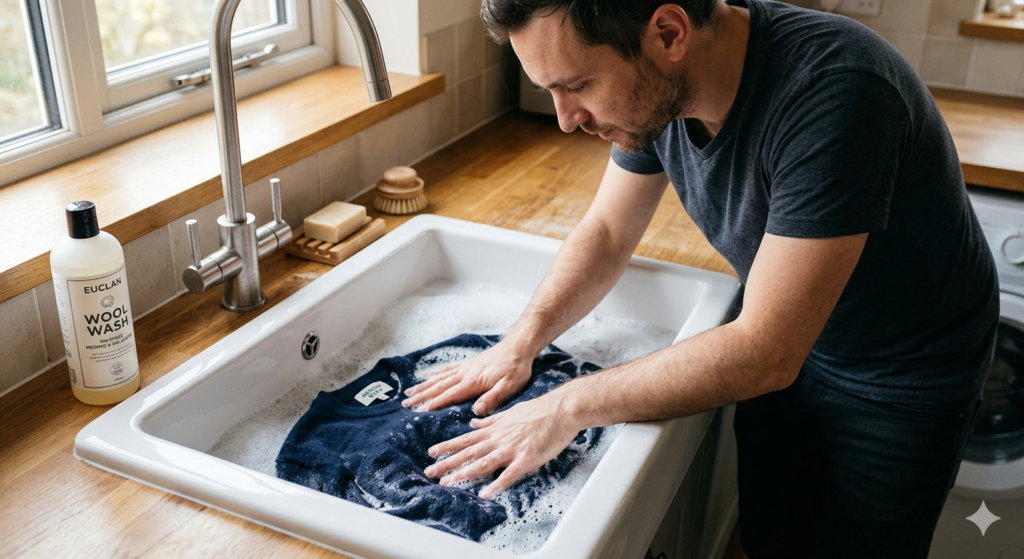
If you are unsure how to handle these delicate fabrics safely without a washing machine, our guide on How to Do Laundry in Hotel Sinks explains the exact hand-washing techniques required. Gentle agitation and proper air-drying will ensure your merino fibers remain smooth and flexible for years.
Conclusion
Understanding why merino wool is itchy fundamentally changes how you shop for and maintain travel clothing. By prioritizing low micron count clothing and choosing superfine fibers, you completely avoid the stiff, prickly sensation associated with traditional wool. Furthermore, mastering proper merino wool care and utilizing simple tricks to soften wool traveling ensures your garments remain a luxurious, functional, and highly comfortable staple of your minimalist wardrobe.
Frequently Asked Questions (FAQ)
Am I allergic to merino wool?
True wool allergies are exceedingly rare. Most people who believe they are allergic to wool are actually just experiencing “mechanical skin irritation” from thick, coarse fibers poking the skin. If you can comfortably wear superfine merino (under 18 microns), you do not have a wool allergy.
Does merino wool get softer after washing?
Yes, high-quality merino wool often “breaks in” and becomes softer after the first few washes. The manufacturing process can sometimes leave a slight residue on the fibers, which washes away, allowing the fabric to achieve its true, soft drape.
Can I use liquid fabric softener on merino wool?
No, you should never use commercial liquid fabric softeners or dryer sheets on merino wool. These products coat the fibers in a thick chemical wax, which completely ruins the wool’s natural ability to wick moisture, resist odors, and regulate your body temperature.